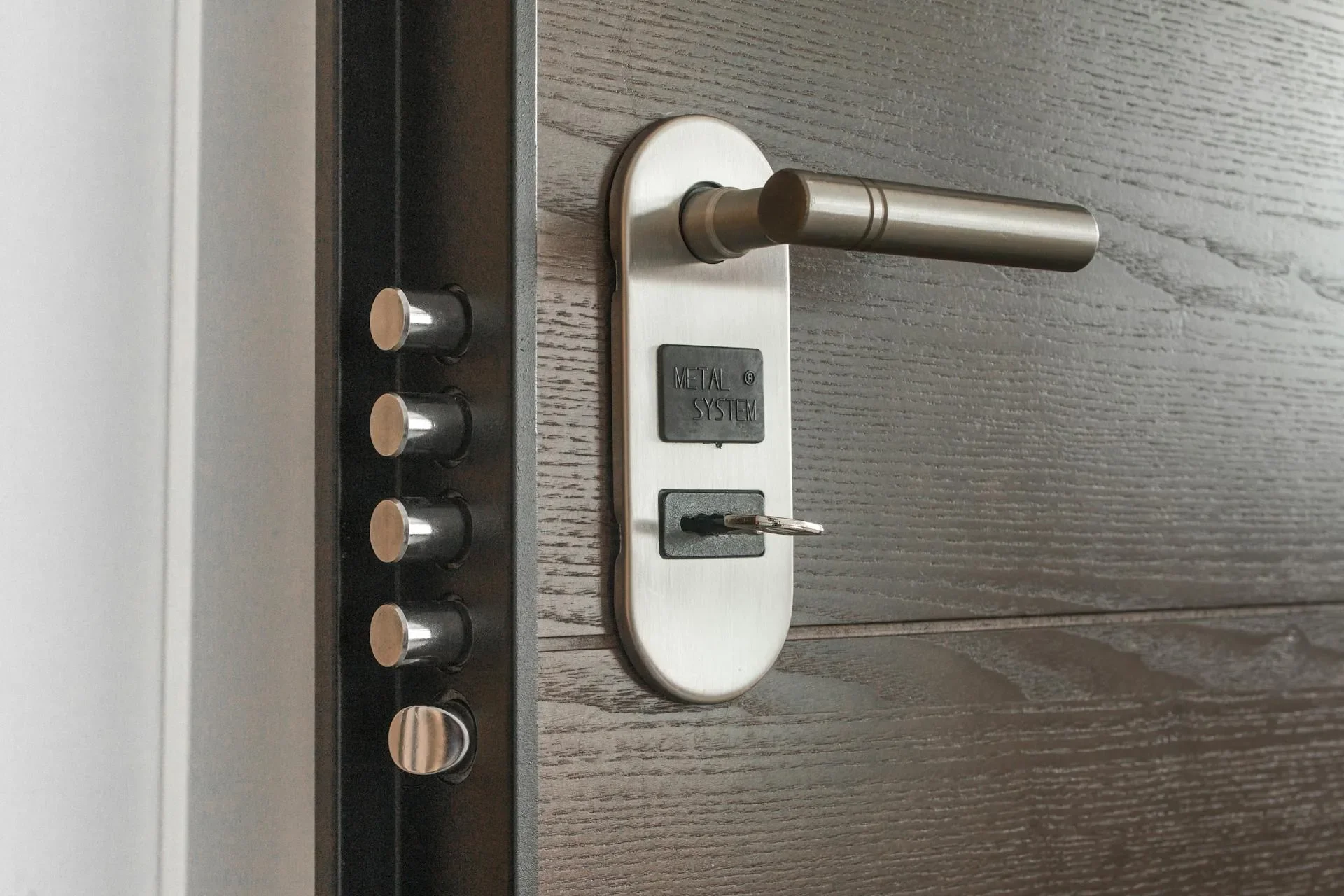
Fake locksmith scams in Austin are exploding. When you’re locked out of your car in the Domain parking garage or standing outside your Mueller apartment at midnight, you’re vulnerable. Scammers know this and target desperate Austin residents with too-good-to-be-true prices that turn into price-gouging nightmares.
Google removed over 10,000 fake locksmith listings in 2025, but new scammers appear daily with bogus Austin phone numbers and fraudulent Google Maps pins. Learning to spot red flags before the locksmith arrives protects you from paying $300-$500 for a $75 service.
Why Locksmith Scams Are Exploding in Austin
Austin’s rapid growth creates perfect conditions for locksmith scams. The city gains 150 new residents daily, many unfamiliar with local legitimate locksmiths. Tech workers, UT students, and new homeowners become prime targets.
Scammers exploit Google Maps by creating fake business listings with Austin addresses and 512 phone numbers. These listings disappear after collecting bad reviews, only to reappear under new names. The cycle continues because Google can’t verify locksmith legitimacy fast enough.
The scam economics are simple. A locksmith scammer pays $10-$50 for a Google Ads click or fake Maps listing. If they scam even two people at $300 each, they profit $550-$590. With low overhead and no physical location, scammers operate profitably while legitimate Austin locksmiths lose business.
SXSW, UT football weekends, and ACL Festival create lockout surges. Scammers flood search results during these periods, knowing desperate people will call whoever appears first. Tourist areas like Downtown, Rainey Street, and South Congress see the highest scam activity.
Red Flag #1: Too-Good-To-Be-True Pricing ($19.95 Specials)
No legitimate Austin locksmith unlocks your car or home for $19.95, $29, or even $49. These prices exist solely to bait you into calling. Once the “locksmith” arrives, the price escalates to $200-$500.
The bait-and-switch works like this: You call about the advertised $19.95 special. The operator confirms that price for a “service call” but mentions nothing about the actual unlocking cost. When the technician arrives, they quote $150-$300 for labor, $75 for “after hours,” and $50 for “travel.”
Legitimate Austin locksmith pricing for 2026:
- Residential lockout during business hours: $90-$160
- Automotive lockout during business hours: $80-$125
- Emergency service after hours: $150-$275
- Commercial lockout: $150-$325
If someone quotes significantly below these ranges, it’s a scam. Our emergency locksmith services provide transparent pricing before dispatch.
Red Flag #2: Generic Business Names and Answering
Scammers use generic names like “Austin Locksmith,” “24/7 Locksmith Austin,” or “Emergency Locksmith Services.” These names are intentionally vague, making it impossible to research the company or find real reviews.
When you call, listen carefully to how they answer. Legitimate locksmiths answer with their specific business name. Scammers answer generically: “Locksmith services, how can I help you?” or simply “Hello?”
The answering service red flag: You call a local number but reach a call center that can’t answer basic questions about Austin neighborhoods, service areas, or typical wait times. They’re booking jobs for out-of-state scammers who’ve never been to Austin.
Ask these verification questions:
- “What’s your exact business name and license number?”
- “Where is your physical shop located in Austin?”
- “How long have you been serving the Mueller area?” (or whatever neighborhood you’re in)
Legitimate Austin locksmiths answer these immediately. Scammers fumble, provide vague answers, or say they’re “mobile only” with no physical location.
Red Flag #3: Unmarked Vehicles and No Identification
Professional Austin locksmiths arrive in clearly marked vehicles with company names, phone numbers, and often photos. Their technicians wear uniforms or at minimum name badges with company identification.
Scammers show up in personal vehicles - unmarked white vans, random sedans, even rideshare vehicles. No signage. No uniform. No business card. No license display. Just someone with basic tools claiming they’re your locksmith.
When the vehicle arrives, look for:
- Company name and phone number clearly visible
- Professional vehicle wrap or magnetic signs (minimum)
- License plate that matches the business registration
- Technician in uniform or with clear ID badge
- Company logo on tools and equipment
If someone shows up in an unmarked vehicle, don’t let them work on your locks. Tell them you’ll wait for a properly identified locksmith and call a verified service like ours at (737) 222-7022.
The unmarked vehicle scam often pairs with fake uniforms. Scammers buy generic “locksmith” shirts online. But they lack company-specific branding, name tags, or identification that matches the business you called.
Red Flag #4: Immediate Drilling Without Trying Other Methods
Experienced Austin locksmiths try non-destructive entry methods first. Picking, bumping, or using specialized tools preserves your lock and saves you replacement costs. Drilling is the last resort, used only when other methods fail.
Scammers drill immediately for three reasons:
First, drilling is faster. They want to complete the job quickly and move to the next victim.
Second, drilling creates urgency and justifies higher prices. “Your lock is destroyed, you need a new one, that’ll be $200 extra for the lock plus $150 installation.”
Third, many scammers lack the skills to pick locks properly. Drilling requires minimal expertise - anyone with a power drill can do it.
A professional locksmith evaluates the lock type, attempts appropriate entry methods, and only drills as a final option. They explain why drilling is necessary and provide upfront pricing for lock replacement.
If a locksmith arrives and immediately pulls out a drill without trying other methods, stop them. Ask why they’re not attempting to pick the lock. A legitimate locksmith explains their reasoning. A scammer becomes defensive or insists drilling is the only option.
Red Flag #5: Cash-Only Payment Demands
Legitimate Austin businesses accept multiple payment methods. Credit cards, debit cards, digital payments, and yes, cash. Scammers demand cash only because it’s untraceable and prevents chargebacks.
The cash-only demand usually comes after the job, when you discover the price jumped from $60 to $475. You protest, but they’ve already destroyed your lock. “Cash only, and I need payment now before I leave” is the ultimatum.
This tactic serves multiple purposes:
Cash eliminates your recourse. Can’t dispute charges, can’t file a chargeback, can’t track the payment. Once you hand over cash, the money’s gone.
Cash payments avoid creating paper trails. No credit card processing, no business account deposits, no tax records. Perfect for illegal operations.
Cash-only creates pressure. Most people don’t carry $300-$500 cash. Scammers may offer to “drive you to an ATM,” adding intimidation to the situation.
We accept all major credit cards, debit cards, and cash. Payment method options are a sign of a legitimate, established business with proper licensing and insurance.
How to Verify a Legitimate Austin Locksmith in 30 Seconds
Before anyone arrives at your location, spend 30 seconds verifying their legitimacy. This quick check prevents most scams.
Step 1: Ask for their Texas locksmith license number. Every legitimate locksmith in Texas must be licensed. Get the license number and verify it at the Texas Department of Public Safety website. No license number = not a real locksmith.
Step 2: Check their Google Business profile age. Click on their Google Maps listing and look at when it was created. Brand new listings (less than 3 months old) with few reviews are suspicious. Established Austin locksmiths have multi-year profiles with hundreds of reviews.
Step 3: Call the number and ask where their physical shop is located. Scammers claim they’re “mobile only” or give vague answers. Legitimate locksmiths provide exact addresses you can verify on Google Maps street view.
Step 4: Check for consistent contact information across Google, Yelp, and their website. Scammers use different phone numbers and business names across platforms. Legitimate businesses have matching information everywhere.
Step 5: Search “[business name] scam” or “[business name] complaints” in Google. Real scam operations generate warning posts, BBB complaints, and Reddit discussions.
This 30-second verification prevents most scams. Yes, you’re locked out and stressed. But 30 seconds now saves you $300 and a destroyed lock.
What to Do If You’ve Already Called a Fake Locksmith
You called before checking. The “locksmith” is on their way. Now what?
If they haven’t arrived yet: Cancel immediately. Call the number back and cancel. You’ll likely hit voicemail or a call center. Follow up with a text: “Cancel my service request. Do not come to [address].” Then call a verified Austin locksmith immediately.
If they’re en route and demanding a “service call fee”: Legitimate locksmiths don’t charge if you cancel before they arrive. A demand for payment when no work was performed confirms it’s a scam. Refuse payment and tell them not to come.
If they’ve arrived and quoted an inflated price: Don’t let them work. Say “This price is much higher than quoted. I’m not proceeding.” They may get aggressive. Stay calm. If they threaten you, call 911. Austin Police are familiar with locksmith scams and will respond.
If they’ve already drilled your lock: Document everything. Get photos of their vehicle (including license plate), their face, and any identification they provide. Get a written receipt if possible. Then dispute the charge with your credit card (if you paid by card) or file a police report (if cash).
If they demand cash and won’t leave: Call 911. This is extortion. Austin PD takes these calls seriously. Don’t feel embarrassed - you’re a crime victim.
After a scam encounter, file reports with:
- Austin Police Department: File an official report
- Texas Department of Public Safety: Report unlicensed locksmith activity
- Better Business Bureau: File a complaint
- Federal Trade Commission: Report the scam at ftc.gov
These reports help authorities track and stop scammers.
How to Find a Trusted Austin Locksmith Before You Need One
The best defense against locksmith scams is preparation. Find a trustworthy locksmith before the emergency happens.
Verify these credentials:
- Active Texas locksmith license (check Texas DPS database)
- Physical business location in Austin (verify via street view)
- Established business (3+ years in business, BBB accredited)
- Consistent information (same name, phone, address across all platforms)
- Real customer reviews (100+ reviews spread across Google, Yelp, Facebook)
- Professional website (not just a landing page)
- Transparent pricing (price ranges posted, no hidden fees)
Where to look:
- Ask neighbors and local Facebook groups for recommendations
- Check with your property management company
- Ask your insurance agent (some insurers maintain approved vendor lists)
- Search “locksmith near me” but verify everything above before calling
- Look for locksmiths with physical locations you can visit
Questions to ask:
- “What’s included in your quoted price?”
- “What payment methods do you accept?”
- “Do you charge a service call fee if I cancel?”
- “Will the same price apply if I need service after hours?”
- “Can you provide references from customers in my neighborhood?”
Legitimate locksmiths answer these questions clearly and confidently. Scammers get vague or defensive.
Save their information now: Add the verified locksmith’s number to your phone with a clear label: “Trusted Austin Locksmith.” When you’re locked out at midnight, you won’t have time for proper vetting.
Your Emergency Locksmith Verification Checklist
Save this checklist to your phone. When you need an emergency locksmith in Austin, verify these before they arrive:
Before Calling:
- Business has physical Austin location (verified on street view)
- Active Texas locksmith license (check TxDPS database)
- Business listing created 6+ months ago
- 50+ customer reviews with recent dates
- Consistent business name across platforms
During Phone Call:
- They answer with specific business name
- They provide upfront price range ($90-$275 typical)
- They ask your specific location (not just “Austin”)
- They give estimated arrival time
- They accept credit cards
When They Arrive:
- Vehicle has clear company markings
- Technician has ID badge with business name
- Vehicle/uniform matches business you called
- They attempt non-destructive entry first
- They confirm price before starting work
Red Flags to Reject:
- Quoted under $50 total cost
- Cash-only payment requirement
- Unmarked vehicle
- No ID or vague identification
- Immediate drilling without trying other methods
- Price increases after arrival
- Aggressive or threatening behavior
- Refusal to provide written receipt
If you encounter 2+ red flags, do not proceed. Call our verified Austin locksmith service at (737) 222-7022 for legitimate, licensed service.
Protect Yourself and Other Austin Residents
Locksmith scams thrive when people stay silent. If you encounter a scam locksmith in Austin, report them and warn others.
Share your experience in local Facebook groups, post Google reviews warning others, and file official reports with Austin PD and Texas DPS. Your report prevents the next victim.
When you find a trustworthy Austin locksmith, leave detailed reviews mentioning your specific neighborhood. “Excellent service in Mueller - arrived in 20 minutes” helps other Mueller residents find legitimate help.
The locksmith scam problem in Austin won’t disappear overnight. But informed residents who know the red flags, verify before calling, and report scammers make the scam less profitable and less common.
Don’t wait until you’re locked out to find a trusted locksmith. Save our number now: (737) 222-7022. We’re licensed, established Austin locksmiths serving all neighborhoods with transparent pricing, professional service, and zero scams.
Our experienced team provides legitimate residential lockout, automotive lockout, and lock rekeying services across Austin. When you call us, our published prices are honest estimates, your technician confirms the final price on site before starting, and you approve it first. No surprises, no price jumps once you have agreed, no scams.
Prices shown are estimates
They give you a general idea of what the service costs, and are not a final quote. Your actual price depends on the lock, the vehicle or door, job complexity, and time of day. Your technician confirms the exact final price with you on site, before any work begins.