
In Texas, a locksmith may not open a structure for a customer unless the customer shows a government-issued ID and gives a signed authorization that they own the property or are otherwise entitled to legal access. For an office, who counts depends on the door and on the lease. That is the question behind an office lockout service call in Austin.
This guide splits the question by door and by person, explains why a landlord lockout is not a locksmith job, and ends with a way to set up an authorization list before the day it matters. Thanksgiving week and year-end are when the person at the door is often not the usual keyholder.
Who can authorize a locksmith to open an office door in Austin?
In Texas, a locksmith may not open a structure for a customer unless that customer shows a government-issued ID and signs an authorization stating they own the property or are otherwise entitled to legal access. For an office, the person who qualifies depends on the door and the lease, not on who happens to be standing outside.
The rule states a test. It does not list job titles that pass, so “I work here” is not an answer by itself. The signature puts the claim in writing: the person asking states that the door is theirs to open.
This is general information, not legal advice. Three things shape an office lockout: which door you are at, which person is asking, and what hardware is on the door. For the service side, see our commercial locksmith services page.
What does a Texas locksmith have to see before opening a commercial door?
A Texas locksmith has to see two things before opening a commercial door: a government-issued ID and a signed authorization saying the customer owns the property or is otherwise entitled to legal access. Texas Occupations Code Section 1702.2865 sets that test. It also exempts a locksmith who is asked to perform services in a case of imminent threat to a person or property, a phrase the section does not define.
The order matters: the ID and the signature come first, then the work. The statute has the same customer show the ID and sign, so the person who signs needs an ID in hand. If yours is inside the locked office, say so on the call, and someone with ID and authority can come to the door.
The signature is the customer’s own statement that they own the property or are otherwise entitled to legal access, so sign only what is true. Statutes are amended, so read the current wording of Section 1702.2865 on the Texas statutes site before you rely on any summary of it. If a company skips the ID and the signature, ask why. Our guide to five red flags of a fake locksmith in Austin covers other warning signs, such as a very low advertised price and a rush to drill.
Who counts as entitled to legal access at an office?
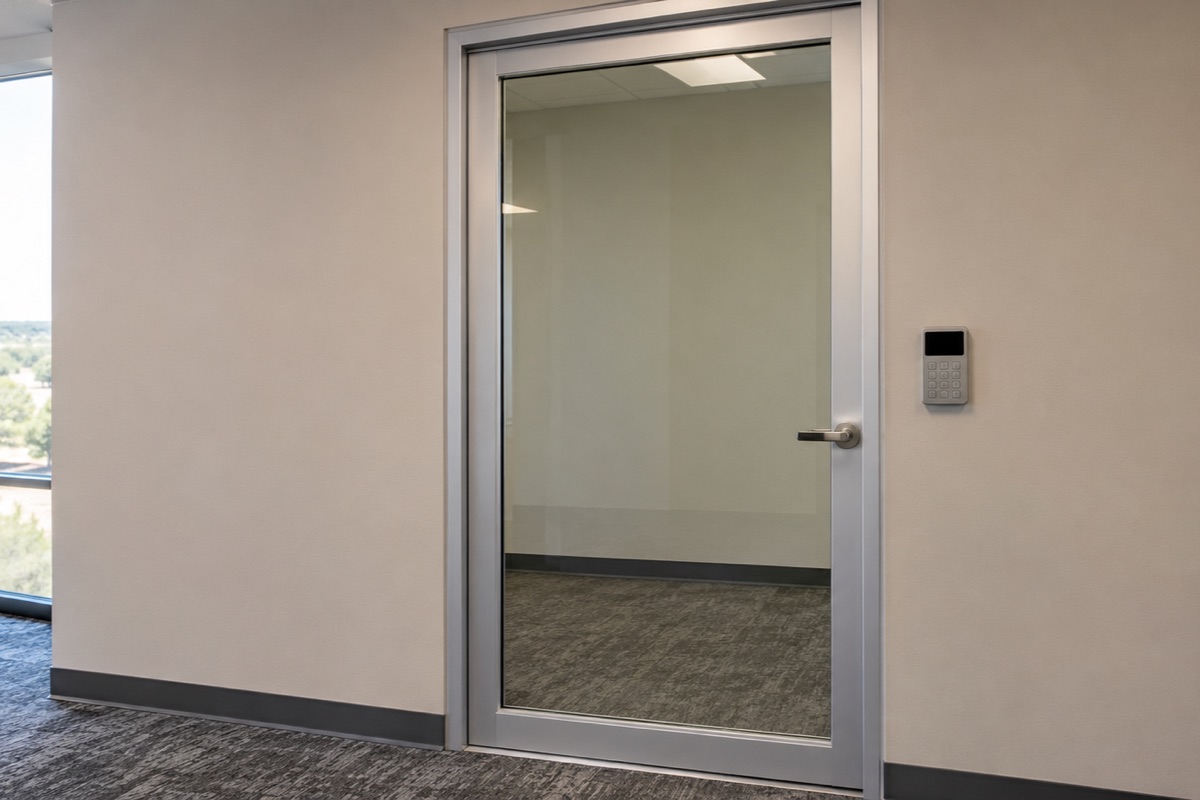
Texas Occupations Code Section 1702.2865 uses one test, owns or is otherwise entitled to legal access, and it does not name owners, tenants, employees or managers. In practice the question is who holds the right to enter that door: the owner, the tenant of record, an employee the tenant has authorized, ideally in writing, or a property manager acting for the owner. The lease and the employer decide that, not the locksmith.
The statute’s conditions are the ID and the signed authorization. Beyond those, each of the four people below does well to have proof of their authority and a phone number for someone who can confirm it.
The owner. Owns the building or the suite, which is the first half of the statute’s test. Bring the ID, and something that links the owner to the business if the names differ.
The tenant of record. The person or company named on the lease. A suite door is usually theirs to authorize, and a company tenant needs someone who can sign for it.
An employee. Authority here is borrowed from the employer or tenant. That is why an unwritten “go ahead” is thin, and why a short written note from the person who can sign is stronger.
A property manager. Acts for the owner. The authority comes from the management arrangement, so be ready to say which doors fall under it.
Suite door or building door: who controls which lock?
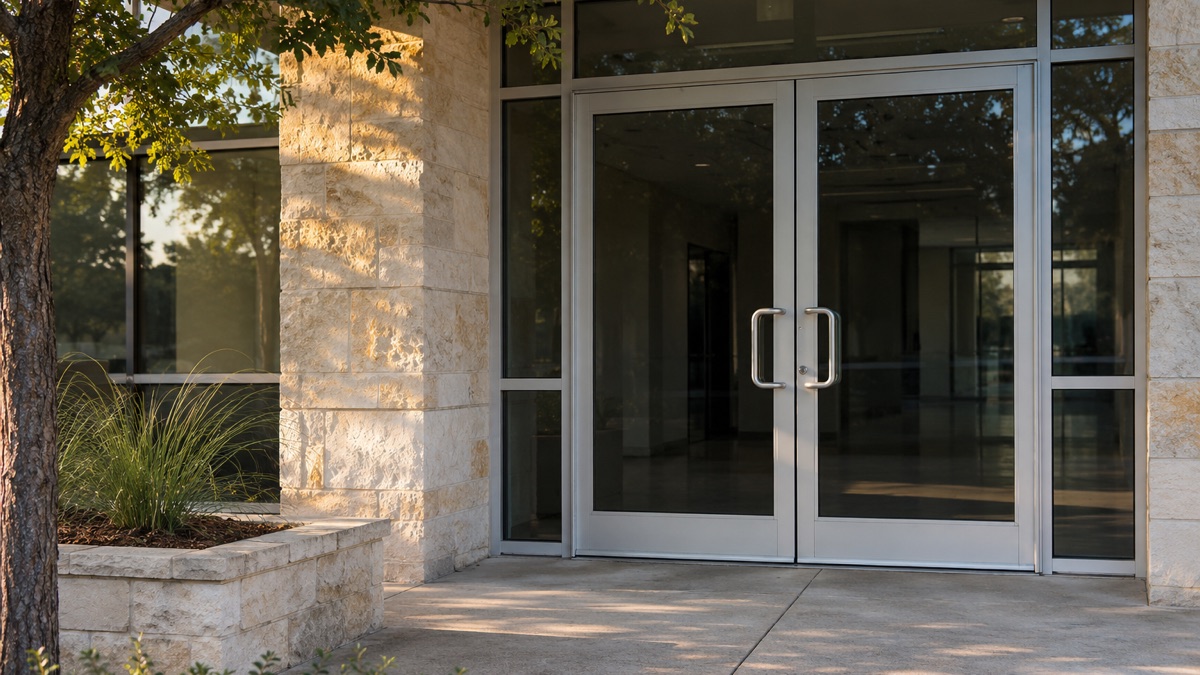
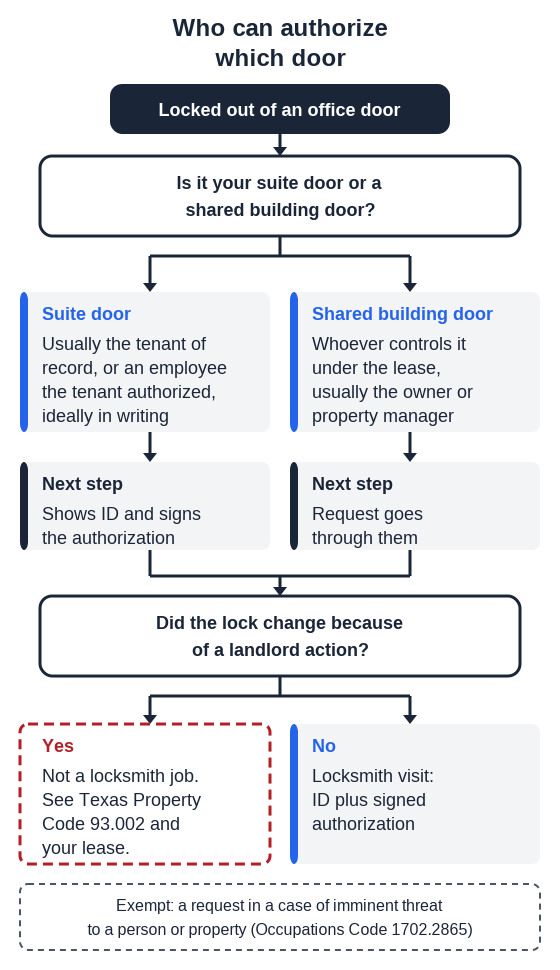
A suite door is usually the tenant’s to control, and the tenant of record or someone the tenant authorized can sign for it. A base-building door, such as a lobby, shared corridor or garage entry, is usually controlled by the building owner or manager, so the request goes through them. Your lease says which doors are which.
One lockout can therefore be two different problems. If it is your own suite door, the tenant can usually deal with it. If it is the shared entry, the tenant may have no say at all. Multi-tenant towers downtown, business parks, converted warehouse offices and co-working spaces are where the line is easy to get wrong.
The practical step: check the lease or ask your property manager which doors you control, before you need to know. A locksmith opening a shared door does not give the tenant authority over it.
If the suite has a storefront entrance, our storefront locks page covers that hardware.
What if your landlord locked you out, not a lost key?
A landlord lockout is a different problem from a lost key. Under Texas Property Code Section 93.002, a commercial landlord may not intentionally prevent a tenant from entering the leased premises except by judicial process, unless the exclusion results from one of three listed causes, including changing the door locks of a tenant who is delinquent in paying at least part of the rent. A locksmith visit does not settle that question.
Under subsection (c), the exceptions are bona fide repairs, construction or an emergency, removing the contents of premises the tenant abandoned, and changing the door locks of a tenant who is delinquent in paying at least part of the rent.
When locks are changed for delinquent rent, subsection (f) says the landlord or agent must place a written notice on the tenant’s front door with the name and the address or telephone number where the new key may be obtained. The key is required to be provided only during the tenant’s regular business hours and only if the tenant pays the delinquent rent. Subsection (g) gives tenants remedies, and a lease supersedes the section to the extent of any conflict, so your lease matters here too.
Section 93.002 covers commercial tenants. Residential tenants fall under a separate chapter of the Property Code. Statutes are amended, so read the current wording of Section 93.002 on the Texas statutes site and check your lease before you act. This is general information, not legal advice.
Which mechanical door hardware changes how a lockout goes?
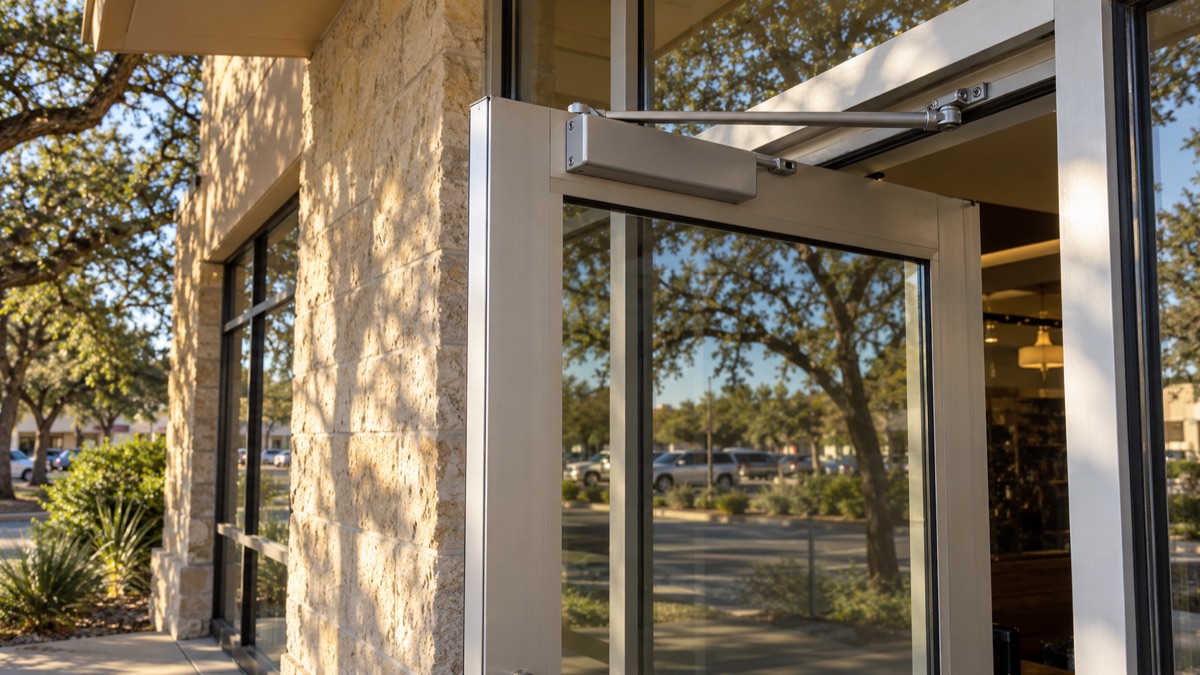
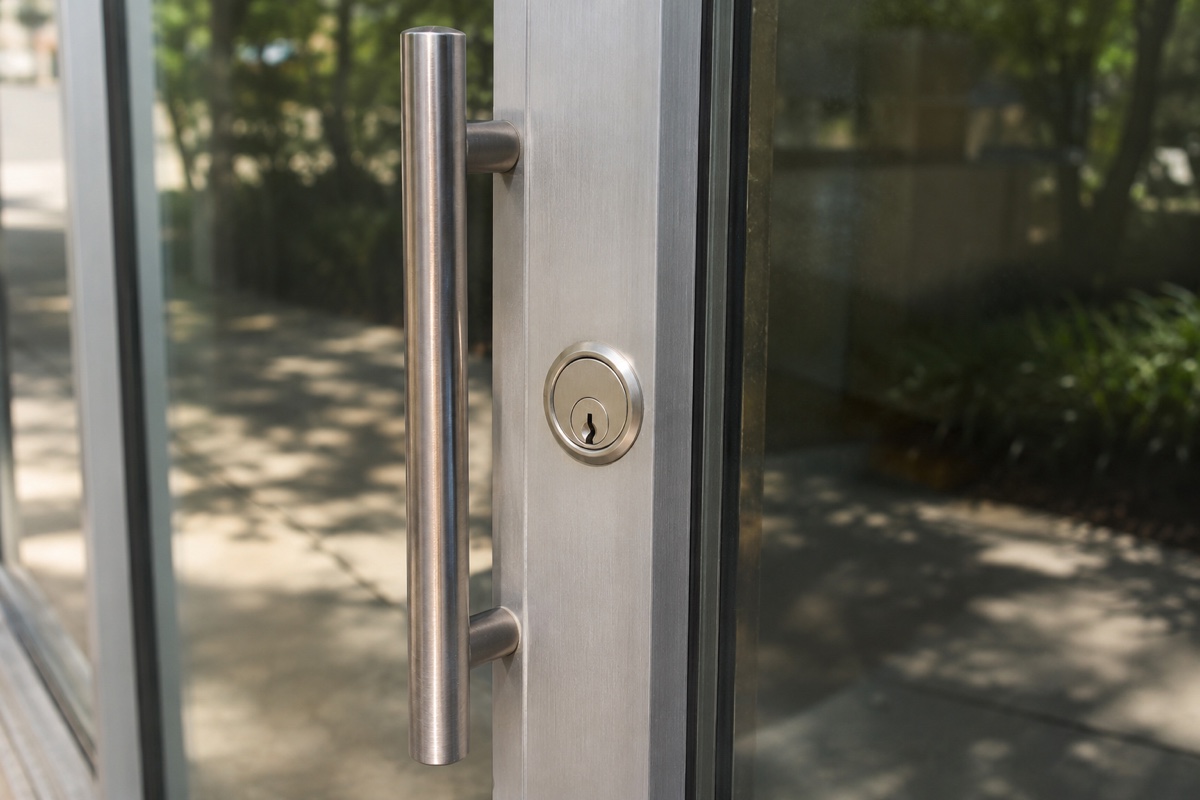
Door hardware changes how an office lockout visit goes, not who can authorize it. An aluminum storefront door with a narrow stile lock, a mortise lock and an exit device each differ once you are outside, so tell the dispatcher what is on the door. The rule about ID and a signed authorization stays the same for all of them.
The table lists the mechanical doors an office lockout call can involve and what is worth telling the dispatcher about each.
| Door or hardware | What to tell the dispatcher | What can change |
|---|---|---|
| Aluminum storefront door with a narrow stile lock | Say it is a narrow stile aluminum door | Adams Rite describes its MS1850S deadlock as made for this door type |
| Mortise lock | Say it is a mortise lock if you know that is what the door has | The technician confirms the lock type on site |
| Exit device or panic bar | Say the door has a push bar inside, and whether it is dogged | Dogging holds the latch retracted, so the door works push-pull. The model building code says egress doors must open from the inside without a key |
| Interchangeable core cylinder | Say the cylinder has a control key or a removable core | The Schlage service manual for large format cores describes a control key extracting the core from the housing |
Adams Rite describes its MS1850S deadlock as made for a single leaf narrow stile aluminum door. Mortise locks have a standard of their own: BHMA publishes ANSI/BHMA A156.13, which sets requirements for mortise locks and latches.
On exit devices, Lori Greene of iDigHardware, an industry education site, writes that dogging a panic device holds the latch retracted so the door works push-pull. It follows that a dogged door is not latched, so it is not the door keeping you out. For interchangeable cores, Schlage’s service manual for large format cores says to insert the control key, rotate it, and pull to extract the core.
Egress rules matter too. The 2021 edition of the model building code says egress doors must be readily openable from the egress side without the use of a key or special knowledge or effort, apart from the exceptions that section permits. Austin has adopted the 2024 edition with local amendments effective July 10, 2025, listed on the City of Austin building technical codes page. The rule is about egress doors, so it does not reach every commercial door.
For a wider look at this hardware, see our guide to storefront door hardware, closers and panic bars. Our panic bars page covers the exit devices themselves.
What changes when the door has a card reader or electric lock?
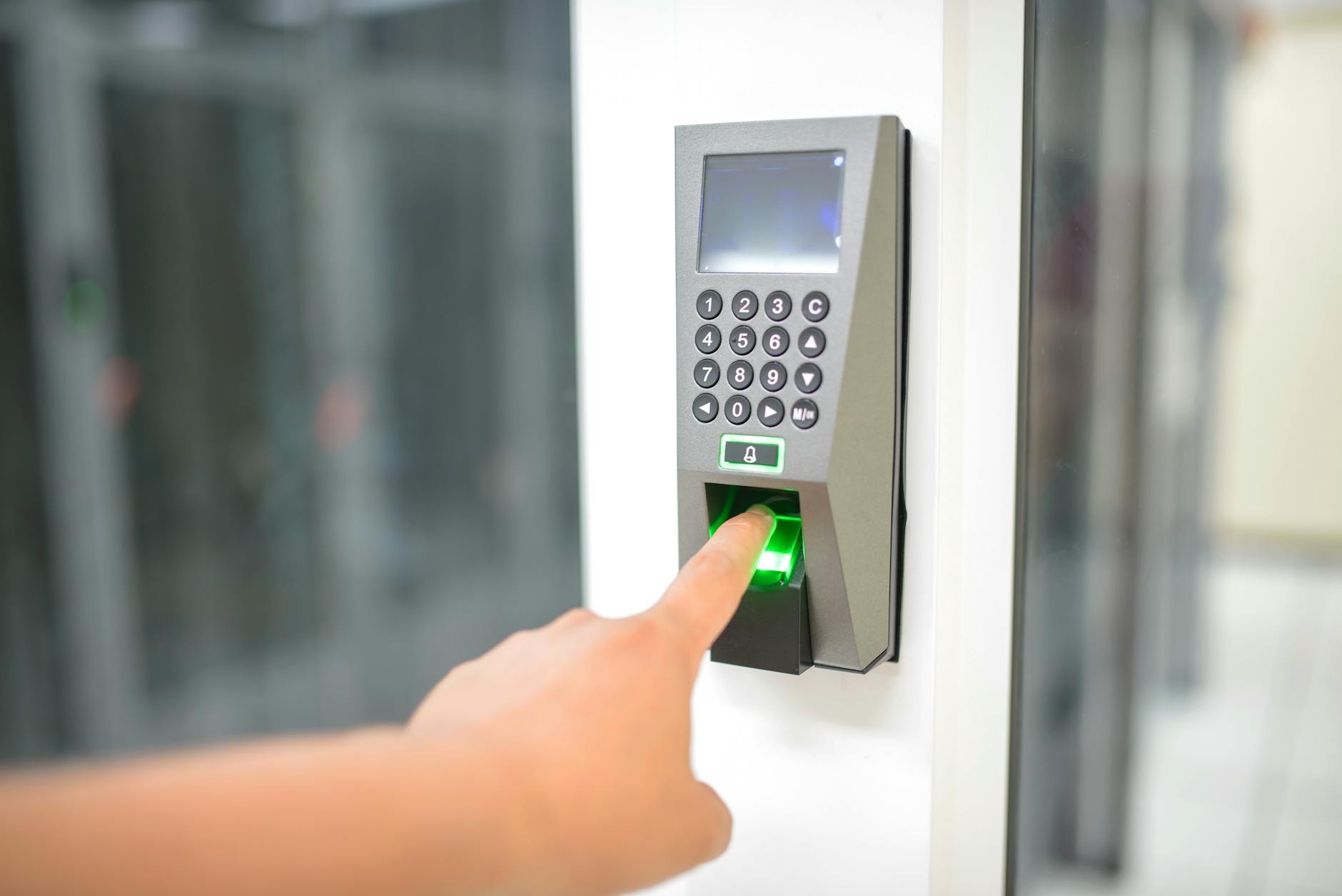
A card reader or electric lock adds a power question to the authorization question. Allegion and Schlage describe fail-safe locks as unlocked when power is removed and fail-secure locks as locked, and Schlage says key override is commonly built into electrified commercial locks. A dead reader may or may not be a lockout, so tell the dispatcher what the door does when power is off.
A dead reader, a dead fob or a power outage is not the same job as a lost key. Schlage says a fail-secure lock can only be opened by someone with a proper key during a power failure. Its page on electrified locks lays out both definitions.
The 2021 model building code says that where an electrically locked egress door is released by its own door hardware, loss of power to the lock unlocks the door. Austin uses the 2024 edition, so treat that as a reason to ask your installer how your own door is set up, not as a promise.
Check who is on your authorization list as well, since those are the people to reach when the reader goes dark. Our guide to access control for small businesses in Austin covers the systems, and the access control page covers our service.
What does the office lockout estimate cover?
The office lockout estimate covers opening the door, and the Austin Locksmiths pricing page puts it at $65-125. Service after 10 PM or before 7 AM adds $25, and every dispatch carries a service call fee we state on the phone. Rekeying, a lock change and hardware or reader repair are separate estimates, and the technician confirms the exact price on site before work begins.
These figures are estimates to help you budget. An authorization problem is a different matter from a price problem, and no figure on the page changes who may sign. A house lockout estimate is built from different drivers, covered in our guide to how a house lockout estimate is built. Every published figure sits on one page, our published price estimates.
How do you set up an authorization list before you need one?
An authorization list is a short written record of who may approve opening each door, kept where the person at the door can reach it. Name the people, say which doors each can approve, and say who can sign for the company. One example of practice, not a standard: the University of Texas System’s key control policy lets department heads and directors approve requests for office keys.
That policy is HOP 1.1.5, and it covers the System Administration offices in Austin. It binds only that institution and is not a standard for businesses. It says department heads and directors are authorized to approve requests for individual office or room keys, and that recipients may not lend keys to people who are not authorized. Read it on the UT System policy library.
Setting up an office authorization list
-
Step 1: Name who can approve entry
List the people who may say yes to opening a door.
-
Step 2: Tie each person to the doors they control
A suite door and a base-building door can have different approvers.
-
Step 3: Say who can sign for the company
That person provides the signed authorization the statute requires.
-
Step 4: Keep the list where the person at the door can reach it
Keep a copy off the locked premises.
-
Step 5: Review it when someone joins, leaves or a key is lost
An out of date list sends the person at the door to the wrong name.
Holiday coverage and year-end turnover are when the list is tested.
How does key control keep an authorization list meaningful?
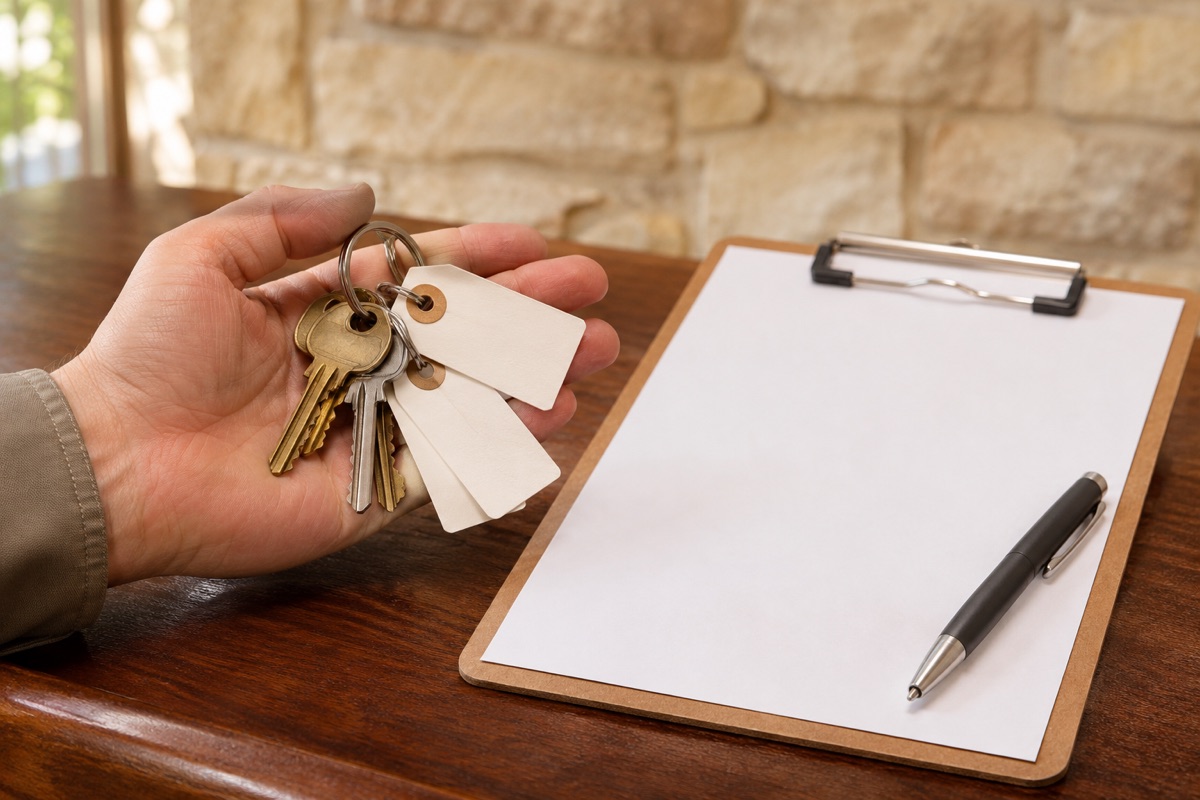
Key control is what keeps an office authorization list from drifting. Collect keys when someone leaves, and rekey when a key is lost. The Austin Locksmiths pricing page estimates rekeying at $30-60 per lock and a lock change at $90-200, confirmed on site. Schlage describes restricted keyways as controlling who can get key blanks, and its large format cores come out with a control key.
A list names people and keys sit in hands, so the two have to match. Schlage says restricted keyways “offer a higher level of administrative security because user access to key blanks is controlled by the original manufacturer” on its page about key systems. Ask your installer who holds the control key. A lost master-level key makes a rekey a company-wide question. Our guide on why your business needs a master key system covers the structure, the master key systems page covers the service, and commercial rekeying covers the rekey itself.
Frequently asked questions
Who can authorize a locksmith to open an office door in Austin?
Under Texas Occupations Code Section 1702.2865, a locksmith may not open the door unless the customer shows a government-issued ID and signs an authorization stating they own the property or are otherwise entitled to legal access. Who fits that test depends on the door and the lease. The section exempts a locksmith asked to perform services in a case of imminent threat to a person or property.
Can an employee authorize an office lockout without the owner?
Whether an employee can authorize an office lockout depends on the authority the employer or tenant gave that employee, ideally in writing. Texas Occupations Code Section 1702.2865 names no job titles. Whoever signs is stating that they are entitled to legal access, so bring any written authority and tell the dispatcher exactly what you have in hand.
What if I am locked out of a door the building controls?
Shared doors such as a lobby, a corridor or a garage entry are usually controlled by the building owner or manager. Ask the property manager which doors your lease covers. A locksmith opening a shared door does not give you authority over it.
Can a locksmith open my office if my landlord changed the locks?
A landlord lock change is a landlord and tenant question under Texas Property Code Section 93.002, not a lost key. A locksmith visit does not settle who may be in the space. Talk to the landlord or a Texas attorney first. This is general information, not legal advice.
How much does an office lockout cost in Austin?
The Austin Locksmiths pricing page gives an office lockout estimate of $65-125. Service after 10 PM or before 7 AM adds $25, and every dispatch carries a service call fee stated on the phone. The technician confirms the exact price on site before work begins.
What should be on an office authorization list?
An office authorization list should name the people who may approve entry, the doors each person can approve, who can sign for the company, where the list is kept, and when it is reviewed. One example of practice, not a standard: the University of Texas System’s key control policy lets department heads and directors approve requests for office keys.
Next step: plan your office door authorization
Set up an office authorization list now, while nothing is locked. Then call (737) 222-7022 for a free phone estimate, or send a request through our contact page. Our hours are Monday to Saturday from 6 AM to midnight and Sunday from 8 AM to midnight.
You can read about our office lockout service first, or check every published figure on the pricing page.
Prices shown are estimates
They give you a general idea of what the service costs, and are not a final quote. Your actual price depends on the lock, the vehicle or door, job complexity, and time of day. Your technician confirms the exact final price with you on site, before any work begins.