
Our published estimate for a house lockout in Austin is $55-110, and it varies by lock type. The technician confirms the exact price on site before any work begins, and you approve it first. That is the number behind our house lockout service, and it is the place to start.
This guide explains what moves a lockout estimate, what the after-hours fee is, why you will be asked for ID, and what to have ready when you call. It is written for the person standing on the porch with a phone, and for the person planning ahead so that day is less stressful.
How much does a house lockout cost in Austin?
Our published estimate for a home lockout is $55-110, and the pricing page notes that it varies by lock type. It is an estimate, not a quote: the technician confirms the exact price on site before any work begins, you approve it first, and any change after that needs your approval. Service after 10 PM or before 7 AM adds $25.
The estimate by phone is free. You describe the door, the lock and what happened, and the dispatcher gives you a closer figure once the situation is clear. Our pricing page says plainly that its ranges depend on lock type, door, complexity and time of day, and that they give a general idea of cost, not a final price.
One more fee belongs in the picture. Every dispatch carries a service call fee that covers travel and the technician’s time on site. We state it on the phone before we send anyone, so ask for it by name when you call. All of our published numbers sit on one page, our published price estimates, if you want to compare them side by side.
What moves a house lockout estimate?
Four things move the number: the type of lock on the door, the time of day you call, the condition of the door and lock, and whether the lockout is only a lockout or also a broken or missing key. The range exists because those differ from house to house. The technician confirms the figure on site.
The diagram puts all four on one page, along with the service call fee, which we state on the phone.
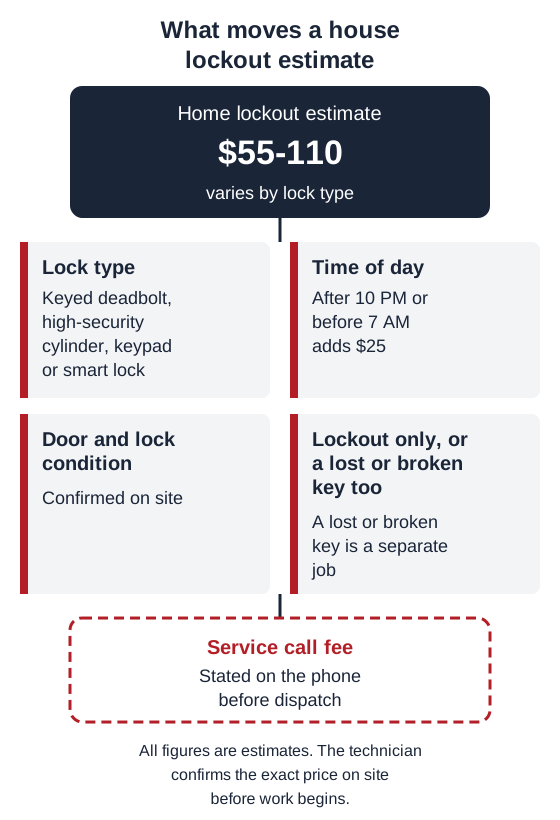
Two of those factors deserve a closer look. Lock type is the one our pricing page names directly, and the next sections take it apart. Key status is the other. A key that is lost is a different situation from a key that is simply inside the house, and a key snapped off in the cylinder is its own job, covered on our broken key extraction page. If the key is gone for good, our lost keys page explains what comes next.
Door and lock condition is the factor nobody can judge from a phone call. A technician cannot know from a description whether a lock is worn, damaged or already tampered with. That is why the final figure is set at the door, after the technician has seen what is actually there.
How does the after-hours fee work?
Service after 10 PM or before 7 AM adds a $25 after-hours fee to the estimate. Our hours are Monday to Saturday from 6 AM to midnight and Sunday from 8 AM to midnight, so the fee applies to service from 10 PM to midnight and, Monday to Saturday, from 6 to 7 AM. Between midnight and opening time we are closed.
Put simply, the published $25 fee has two windows: late evening, 10 PM to midnight, and the first hour of the morning on days we open at 6 AM. On Sundays we open at 8 AM, so the early window does not come up.
The after-hours fee is a flat $25, not a percentage of the job. Ask on the phone whether any other rate applies to your call, and expect it to be stated before anyone is sent.
Why does a locksmith ask for ID before opening your door?
Texas Occupations Code section 1702.2865 says a locksmith may not perform services for a customer seeking entry to a structure unless the customer shows a government-issued ID and gives a signed authorization that they own the property or are otherwise entitled to legal access. The section exempts a case of imminent threat to a person or property.
That rule explains the questions you will hear on the call and at the door. It is the law the locksmith works under, and it protects whoever actually owns the home. The FTC’s Finding a Locksmith article pointed the same way: a legitimate locksmith should confirm your identity and make sure you own the property before starting work.
You can read the rule in the enrolled bill text that first enacted it, where it is numbered 1702.286, and the wider law sits in the Texas Private Security Act, Chapter 1702. This is general information, not legal advice.
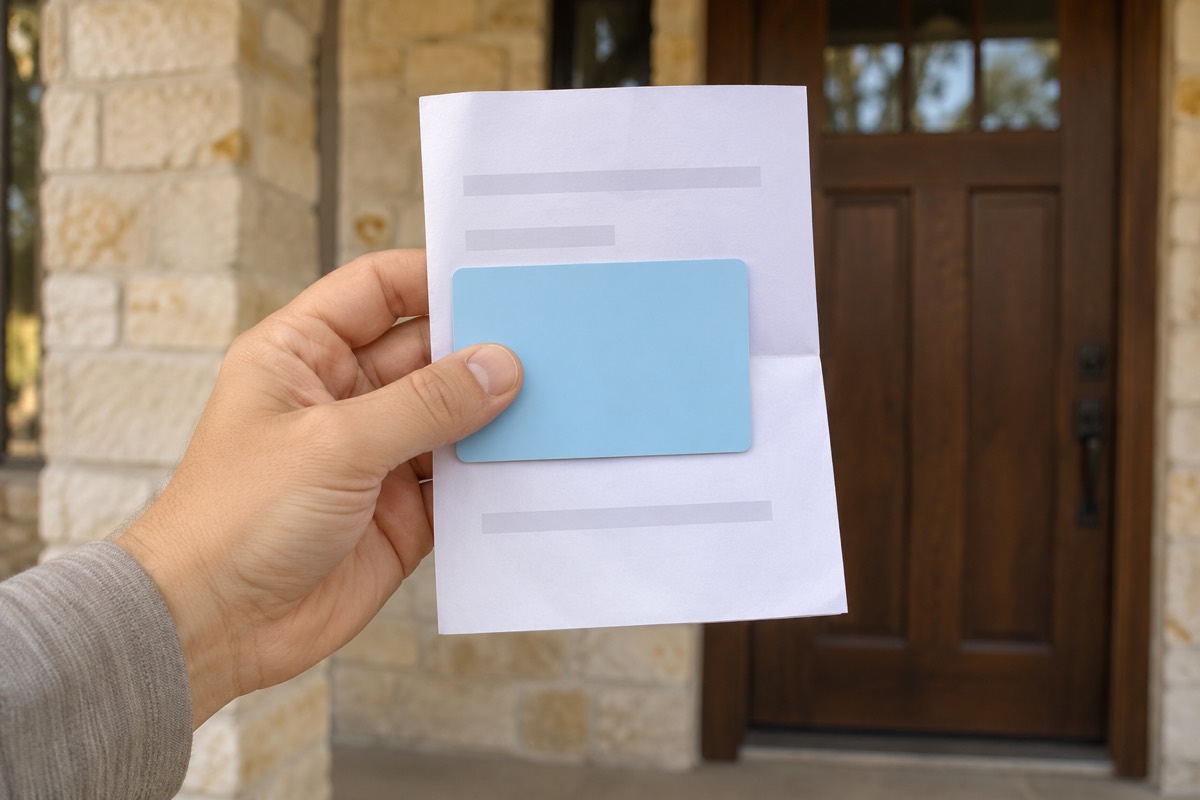
Our house lockout page says we verify residency before opening a home, and our terms list what we may ask for. A recent utility bill, a lease or a piece of mail with your name and the address works as proof of residence. The point is that the person at the door can show a connection to it.
Does the type of lock change the price?
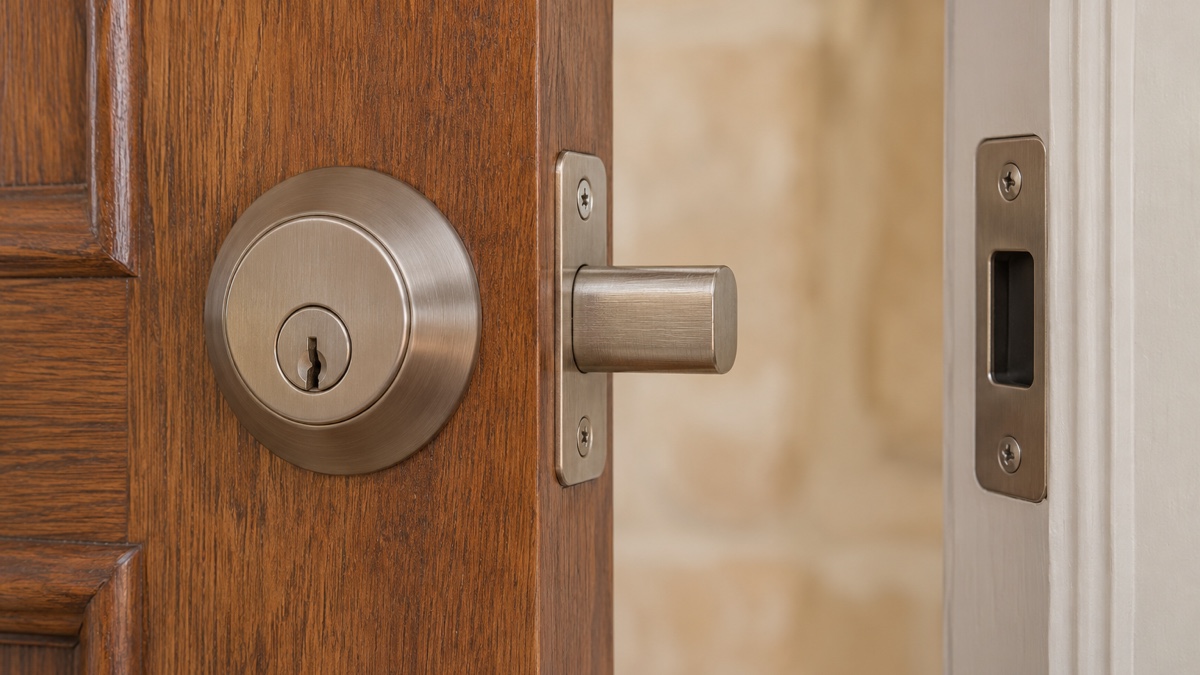
Our pricing page says a home lockout varies by lock type, and it does. A standard keyed deadbolt, a high-security cylinder and a keypad or smart lock each work differently, so the technician has to see which one is on your door. We do not publish a price per lock type, so the figure is confirmed on site.
What we can describe is how the hardware differs, and why that matters when someone arrives to open it.
| Lock type | What to tell the dispatcher | What to expect |
|---|---|---|
| Standard keyed deadbolt | The brand, and whether it is a deadbolt or a knob lock | The technician confirms the price on site after seeing the lock |
| High-security cylinder | Say so if you know the cylinder is high-security | The maker describes extra internal mechanisms, so the technician confirms the price on site |
| Keypad or smart lock | The brand, the model and whether the battery has died | Depends on the model; see the dead battery section below |
Take the high-security row. Schlage says its Primus cylinders add a secondary, independent sidebar and finger-pin locking mechanism, and offers an optional UL 437 listed version with hardened steel anti-drill pins. That is the maker’s description, on its own Primus security upgrade page, and it shows why the technician wants to see the lock before naming a figure.
Residential deadbolts have their own standard, ANSI/BHMA A156.40, and BHMA, the body that publishes it, notes that real results differ with installation and with door and frame construction. So even two identical locks can behave differently on two different doors. Our guide to high-security locks for Austin homes explains the labels in more detail.
What if a keypad or smart lock has a dead battery?
A dead battery does not always mean a lockout. Several makers document a 9-volt battery held to contacts below the keypad for temporary power, and some keypad models also have a key override. It depends on the model. Kwikset says its Premis lock stays in its last known state when the batteries are completely drained, so a drained lock that was locked stays locked.
Here is what the makers say. For some Schlage touchscreen models, the manual describes a battery jump start: connect a new alkaline 9-volt battery to the contacts below the touchscreen keypad. The instructions are in the Schlage Touch manual. For the Kwikset 905 keypad deadbolt, the support page says to make sure both terminals of the 9-volt battery touch the terminals below the keypad, in the Kwikset 905 battery answer.
Not every smart lock has this feature. That is why the dispatcher asks for the brand and model, and why a dead-battery call can be a different job from a lost-key call. If your lock has no contacts and no working key cylinder, the technician sorts out the next step on site, and the price is confirmed there.
What should you have ready when you call?
Have five things ready: the address, a government-issued ID, something that shows you live there or own the property, the type of lock on the door, and whether a key is lost, broken inside the lock or simply inside the house. That lets the dispatcher state the estimate and the fees on the phone.
Each item answers a question the estimate depends on. The address tells the dispatcher where the work is. The ID covers the Texas rule above, and proof of residence covers our own residency check. The lock type is the factor our pricing page names. The key status separates a lockout from a lost-key job.
If your ID is inside with the keys, say so on the call. Ask what you will need to show at the door. If the key is gone entirely, mention it, because a lost key can lead to a second job.
What happens on the call and at the door?
On the call you give the address and lock details and hear the estimate and any fees. At the door the technician checks your ID and asks you to sign an authorization, looks at the lock, confirms the exact price and waits for your approval before starting.
A house lockout, in the order it happens
-
Step 1: Call and describe the lock
Give the address, the lock type and what happened to the key.
-
Step 2: Hear the estimate and fees
The dispatcher states the estimate, the service call fee and any after-hours fee.
-
Step 3: ID and signed authorization at the door
The technician checks your government-issued ID and asks you to sign.
-
Step 4: Price confirmed on site and approved
The technician looks at the lock, names the exact price and waits for your yes.
-
Step 5: Door opened, invoice in hand
Ask for an invoice that lists labor, parts and every fee.
The last step comes from consumer advice. The FTC’s Finding a Locksmith article said to get a written invoice that shows the company name and lists labor, replacement parts and all fees before you pay. It also said that if the estimate on site does not match what you heard on the phone, think about whether you want to call someone else, and do not hand over a credit card until you agree with the estimate.
That is a reasonable rule for any company, including ours. For more on the warning signs, see our guide to red flags in a locksmith quote.
What does the estimate cover, and what does it not?
The $55-110 home lockout estimate is for the lockout itself, and the final figure is confirmed on site. It does not cover a new key, a rekey, a lock change or any hardware, which are separate jobs with their own estimates. Every dispatch also carries a service call fee, stated on the phone, so ask whether the figure you hear includes it.
Why spell this out? Because a lockout and a lock problem are two different questions. Opening the door answers the first one. If the lock is damaged, worn or no longer trustworthy, that is the second question, and it is answered after the door is open.
The technician cannot know from the phone whether a lock is broken or damaged. That is another reason the on-site confirmation exists. For a longer look at what an unlocking visit involves, and what do-it-yourself attempts can cost, read our older piece on what an unlocking visit includes and what DIY attempts can cost.
When does a lockout turn into a rekey or a lock change?
If the key is lost, a rekey or a lock change is a second job after the door is open. A rekey is estimated at $30-60 per lock, a lock change at $90-200, a new deadbolt installation at $120-225 and a smart lock installation at $150-325. Each is a separate estimate, confirmed on site.
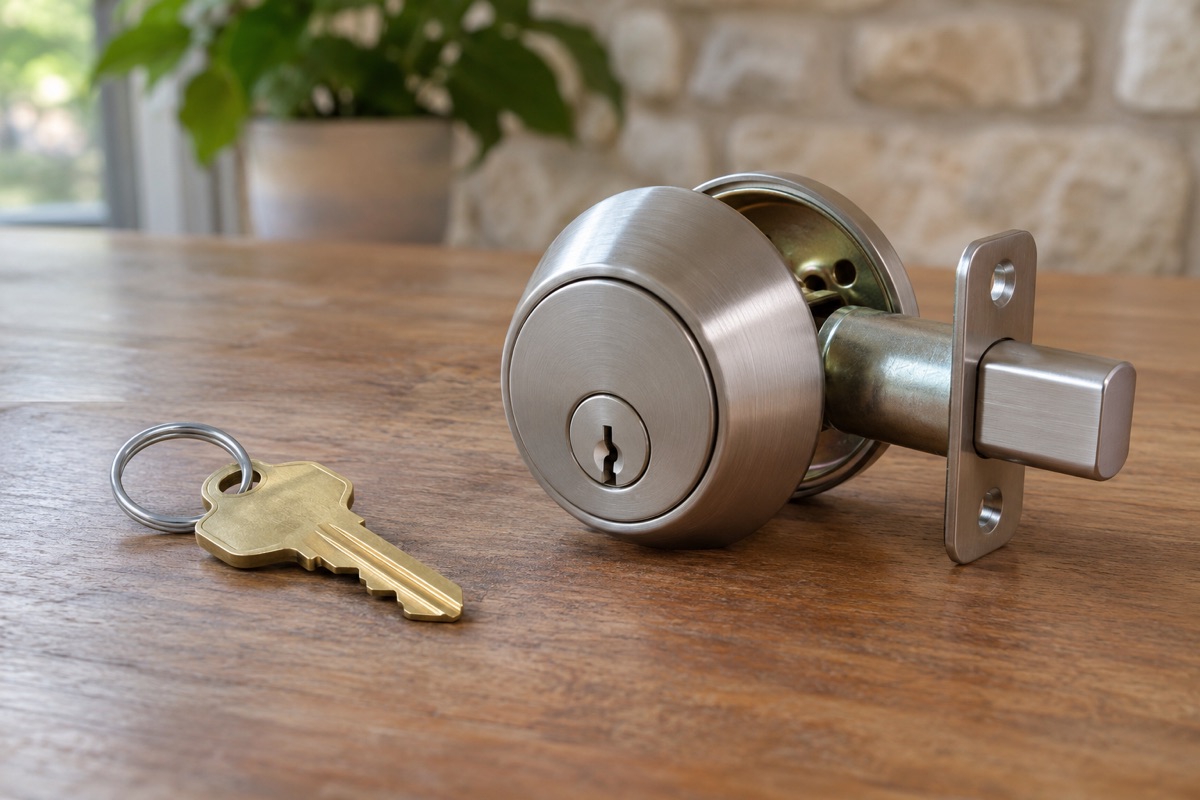
Rekeying changes the inside of the lock so the old key no longer works, and you can read about it on our rekeying page. A lock change swaps the hardware, covered on the lock change and replacement page. Which one fits depends on the lock and how you feel about it, and our guide on rekey or replace walks through that choice.
For the per-lock figure in more detail, see what a rekey costs per lock. If a door needs a new deadbolt, our guide to deadbolt installation door checks and cost covers what the installer looks at first.
What changes if you rent?
If you rent the house, the Texas ID rule still applies: a locksmith may not open a structure unless the customer shows a government-issued ID and gives a signed authorization that they are entitled to legal access, and a tenant can be. Have your lease or a recent bill ready. For apartment doors specifically, our apartment lockout page covers the details.
How can you look up a locksmith company before you book?
The Texas Department of Public Safety runs a public search called Texas Online Private Security, and you can search businesses and individuals there and filter by licence type, including Locksmith. The search is open to anyone, so you can check any locksmith company before you book.
Use the Texas Online Private Security search to look up a company, then filter by licence type. The Private Security Act is administered by the Texas Department of Public Safety, so that is the right place to check.
There is also a second check at the door. Individual locksmiths get a pocket card with their name, a photograph, a signature and issue and expiry dates. Asking to see it is reasonable.
Frequently asked questions
How much does a house lockout cost in Austin?
Our published estimate for a home lockout is $55-110, and it varies by lock type. It is an estimate, not a quote. The technician confirms the exact price on site before any work begins, you approve it first, and any change after that needs your approval.
Is there an extra charge at night?
Yes. Service after 10 PM or before 7 AM adds a $25 after-hours fee. Our hours are Monday to Saturday from 6 AM to midnight and Sunday from 8 AM to midnight, so the fee applies to service from 10 PM to midnight and, Monday to Saturday, from 6 to 7 AM.
Is there a service call fee?
Yes. Every dispatch carries a service call fee that covers travel and the technician’s time on site. We state it on the phone before we send anyone, so you hear it before you agree to anything.
What ID do I need?
Texas law says a locksmith may not open a structure for a customer unless the customer shows a government-issued ID and gives a signed authorization that they own the property or are otherwise entitled to legal access. We may also ask for proof that you live there, such as a recent bill or a lease.
Can you open a keypad or smart lock with a dead battery?
It depends on the model. Several makers document a 9-volt battery held to contacts below the keypad for temporary power, and some keypad models have a key override. Tell the dispatcher the brand and model, and the technician confirms what applies on site.
Does the estimate include a new key or a rekey?
No. The home lockout estimate covers the lockout. A rekey is estimated at $30-60 per lock, a lock change at $90-200, a deadbolt installation at $120-225 and a smart lock installation at $150-325. Each is a separate estimate, confirmed on site.
Next step: get a house lockout estimate
Have the checklist ready, then call (737) 222-7022 for a free phone estimate, or send a request through our contact page. The technician confirms the exact price on site before work begins. Our hours are Monday to Saturday from 6 AM to midnight and Sunday from 8 AM to midnight.
You can read more about our house lockout service first, or check every published figure on the pricing page.
Prices shown are estimates
They give you a general idea of what the service costs, and are not a final quote. Your actual price depends on the lock, the vehicle or door, job complexity, and time of day. Your technician confirms the exact final price with you on site, before any work begins.