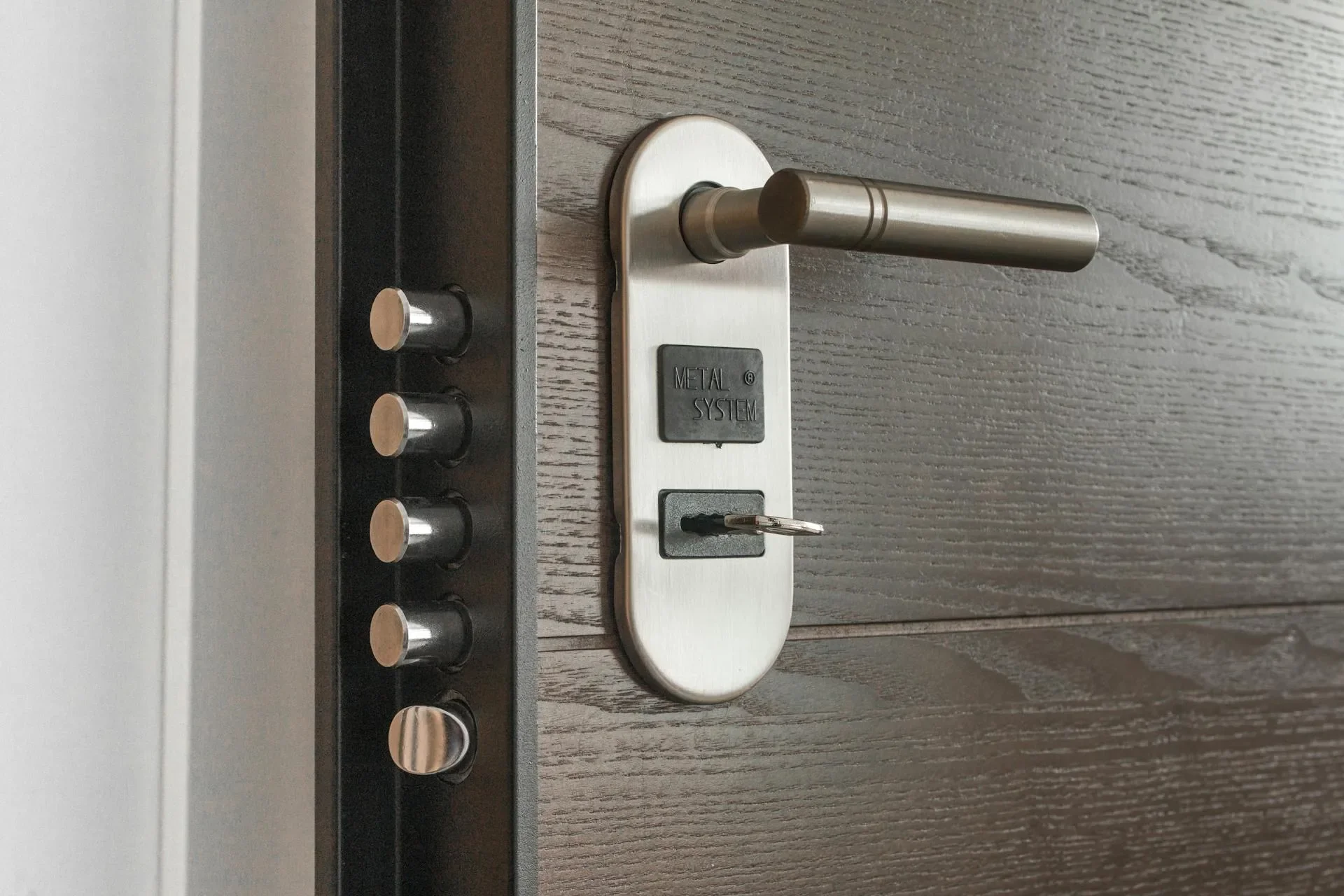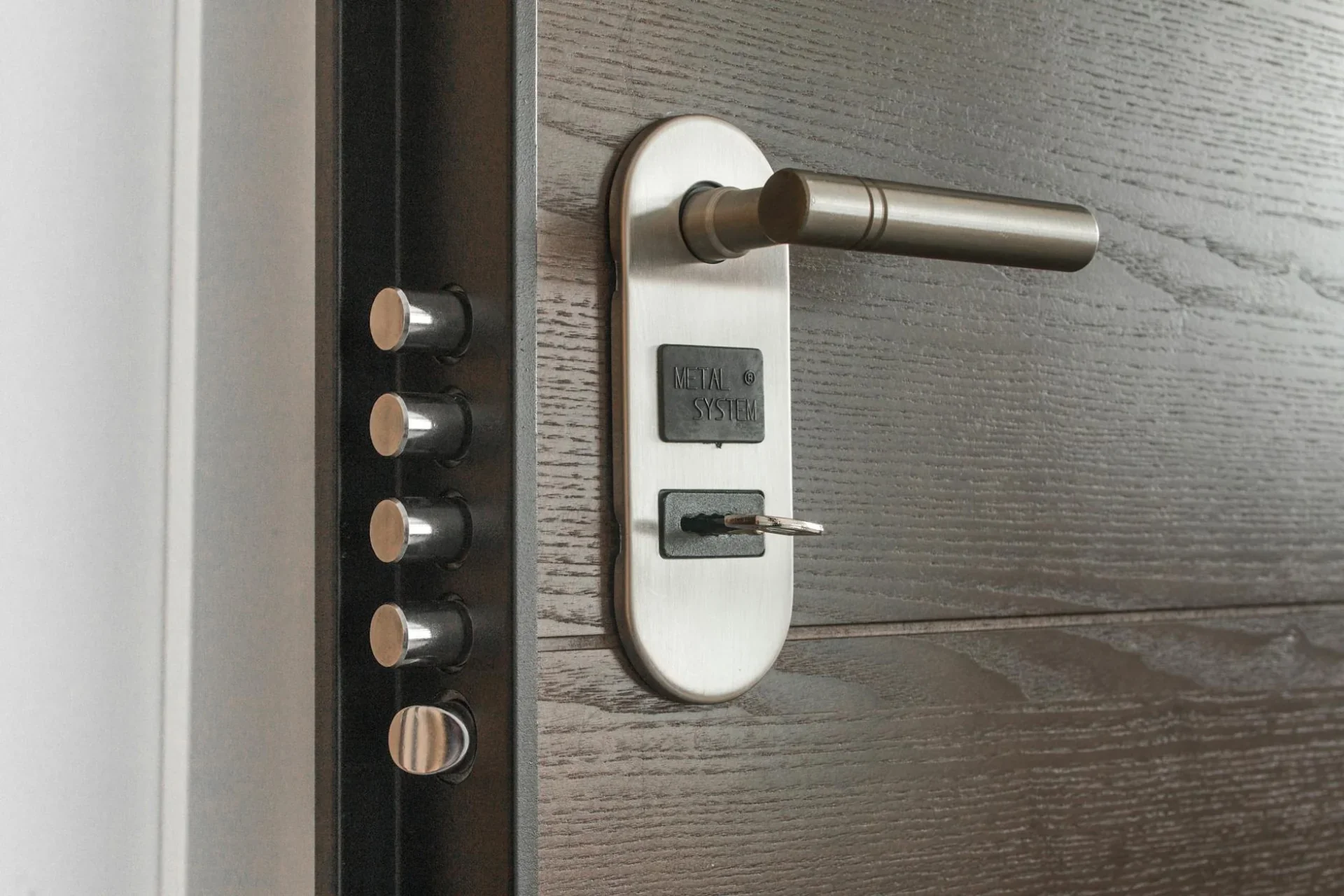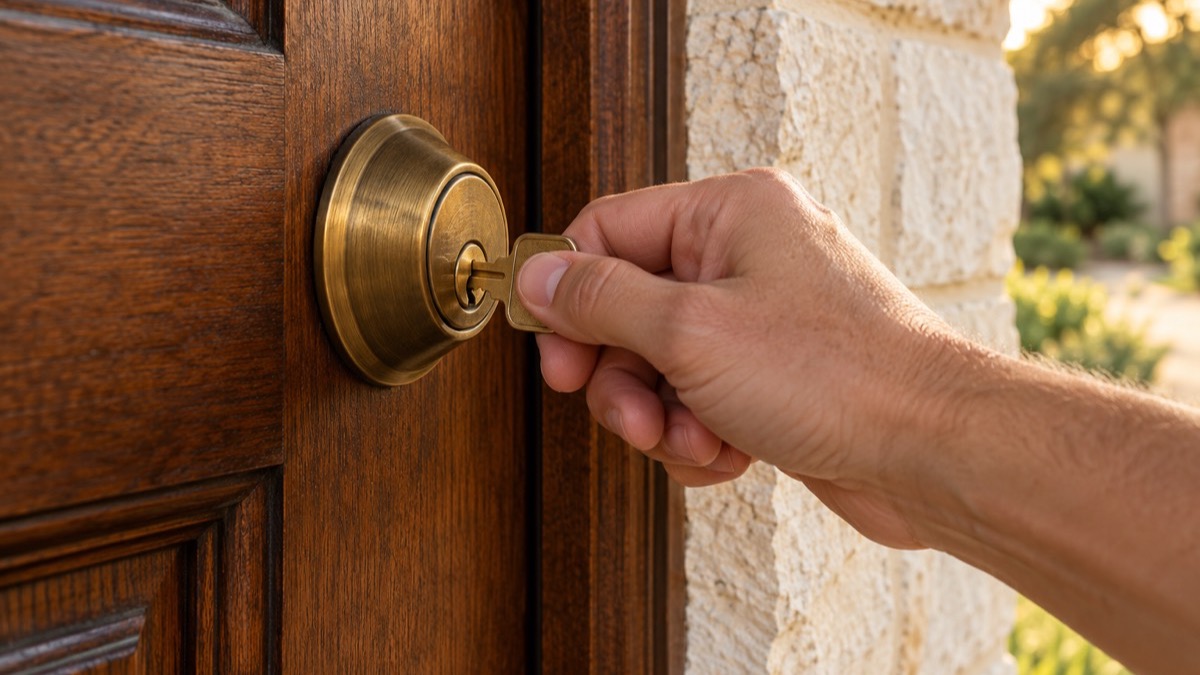

A high-security lock is a lock built to resist specific attacks, such as picking, drilling and unauthorized key copying, and backed by an independent rating on its cylinder. The words on the box are a marketing phrase. The rating behind them is what you can actually check, and the door around the lock matters as much as the lock.
That distinction matters in Austin, where one word covers very different front doors. A 1920s bungalow in Hyde Park or Clarksville and a modern tract home in Pflugerville can both be sold a “high-security deadbolt,” yet they need different hardware, different prep work and different expectations. This guide explains what the label covers, what it leaves out, and how to decide.
What does “high-security lock” actually mean?
A high-security lock is a lock whose cylinder is designed to resist picking, drilling and unauthorized key copying more strongly than a standard builder-grade deadbolt, and which ideally carries an independent rating such as ANSI/BHMA A156.30 or a UL 437 listing. Without a named rating, the phrase tells you very little about the lock itself.
Marketing copy uses “high-security” for everything from a heavy-looking deadbolt to a patented sidebar cylinder. Those are not the same product. Security researcher Marc Weber Tobias has argued that the UL 437 label gives no formal definition of “high security” on its own, which is why the specific model and rating matter more than the adjective.
So the useful question is never “is this lock high-security?” It is “which attacks does this lock resist, who tested that, and what else on the door has to hold up?” The rest of this guide answers those three questions in order. If you already know you want hardware installed, our high-security locks service page covers what we install.
The four layers behind the label
A lock earns the high-security description through four layers working together: pick resistance, drill resistance, key control and door reinforcement. A cylinder can be strong in one layer and weak in another, and a strong cylinder on a weak door still fails at the door. Each layer answers a different way a lock gets defeated.
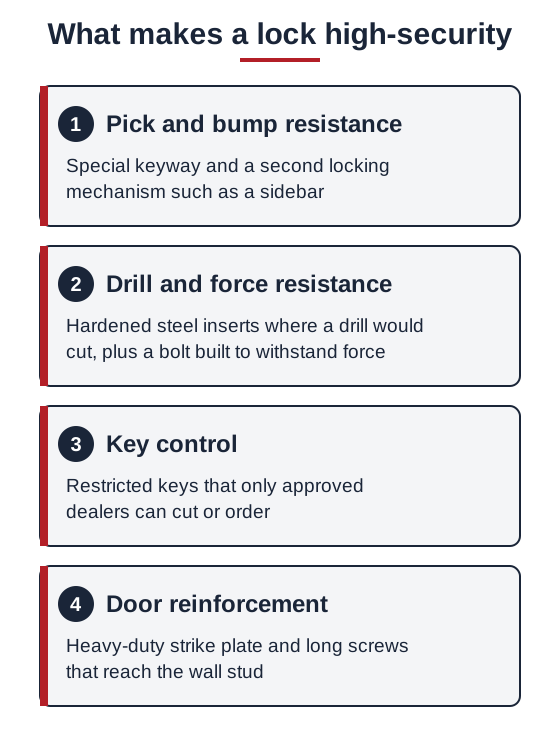
Pick resistance is about covert attack: opening the lock without the key and without leaving obvious damage. Drill resistance is about destructive attack: hardened parts that make drilling the cylinder slow and difficult. Key control is about who can get a working copy of your key. Door reinforcement is about the strike plate, the screws, the frame and the door itself.
Most “upgrade” conversations focus only on the first layer. The fourth is the one that most often gets skipped, and the fourth is where the lock meets the building.
Which standards sit behind the label?
Three standards do most of the work. ANSI/BHMA A156.40 covers residential deadbolts. ANSI/BHMA A156.30 covers high-security cylinders, rated in three categories at levels A, B and C. UL 437 covers key locks, including door locks and locking cylinders. Knowing which one a product cites tells you what was actually tested.
ANSI/BHMA A156.40 is the standard written specifically for residential deadbolts and deadlatches. It sets requirements for durability, security and finish, with each category graded independently. It is the one to look for on an ordinary home deadbolt.
ANSI/BHMA A156.30 is the high-security cylinder standard, for mechanical and electromechanical cylinders. It tests three categories: key control, destructive attack and surreptitious attack. Levels run A, B and C in each category, with C the highest, and a certificate lists a level for each one. A cylinder can therefore be strong on key control and only moderate on drilling, and the paperwork says so.
UL 437 is titled “Key Locks” and covers items such as door locks and locking cylinders. UL’s published scope says certified locks may also be tested for burglary resistance depending on the product type. UL describes its door hardware work on its door hardware testing and certification page.
For general grading, BHMA also uses Grade 1, 2 and 3 for many bored locks, with Grade 1 the highest. For a Grade 1 bored lock under ANSI/BHMA A156.2, the cycle test is 1,000,000 cycles. Older web pages still quote 800,000, which comes from an earlier edition of the standard. Treat any number you find online with the edition year in mind.
Pick and bump resistance: what “resistant” really means
Pick resistance and bump resistance mean a lock takes more time and more skill to open without its key. They do not mean impossible. No lock is immune to picking, and bump-resistant never means bump-proof. Bumping works on conventional pin tumbler cylinders when someone has a key blank that fits the keyway, which is why restricted keyways and sidebar designs exist.
Here is how a bump key works. A key is cut to the maximum depth in every position. It is inserted, pulled back one notch, then struck while turning pressure is held. The top pins jump, a gap opens at the shear line, and the plug turns. Security researcher Marc Weber Tobias wrote in a 2006 technical analysis that “virtually all conventional pin tumbler cylinders are at risk.” The mechanism has not changed since.
The practical barrier is getting a key blank that fits the keyway. Special or restricted keyways make that harder. Tobias also noted that sidebar designs are much harder to bump, that some interactive designs can make bumping difficult or impossible, and that even so, some high-security locks have been opened. Reporting from 2008 describes Medeco locks once considered bump-proof being shown bumpable. That history is why honest installers say “resistant.”
What you want is a cylinder where the practical cost of an attack goes up: a special keyway, a second locking mechanism such as a sidebar, and hardened parts where the drill would go. That is exactly what the next two sections cover.
Drill and force resistance: where the hardened parts go
Drill and force resistance come from hardened steel inserts placed where a drill bit would cut, plus a plug and bolt built to withstand pulling, torque and impact. A156.30 tests these as the “destructive attack” category, and higher levels demand more time or force to defeat. Manufacturers describe their own designs, so read claims as claims.
BHMA’s destructive category includes a cylinder plug static pull test, a plug impact pull test, applied torque and a drill resistance test. BHMA’s published summary describes the drilling requirement as five minutes total for level B and ten minutes for the highest level C. Those are laboratory benchmarks for the cylinder, not a promise about any door.
Manufacturers build to that kind of test in different ways. Schlage’s Primus system, for example, uses a patented sidebar plus a finger-pin second locking mechanism on top of the six standard pins, and the company’s optional UL 437 cylinders add hardened steel anti-drill pins and are described by Schlage as pick-resistant and drill-resistant. You can read the maker’s own description on Schlage’s Primus security upgrade page. That is a manufacturer’s claim about a specific product line, which is exactly the level of evidence to expect from a product page.
The same holds for any brand: a model name plus a standard citation is checkable. A brochure adjective is not.
Key control: who else can copy your key?
Key control limits who can obtain a working copy of your key. On an ordinary deadbolt with an open keyway, blanks are easy to buy and copy. High-security systems use restricted keyways, patented key profiles and authorization rules so that only approved dealers can cut or order keys. It matters most when keys have passed through many hands.
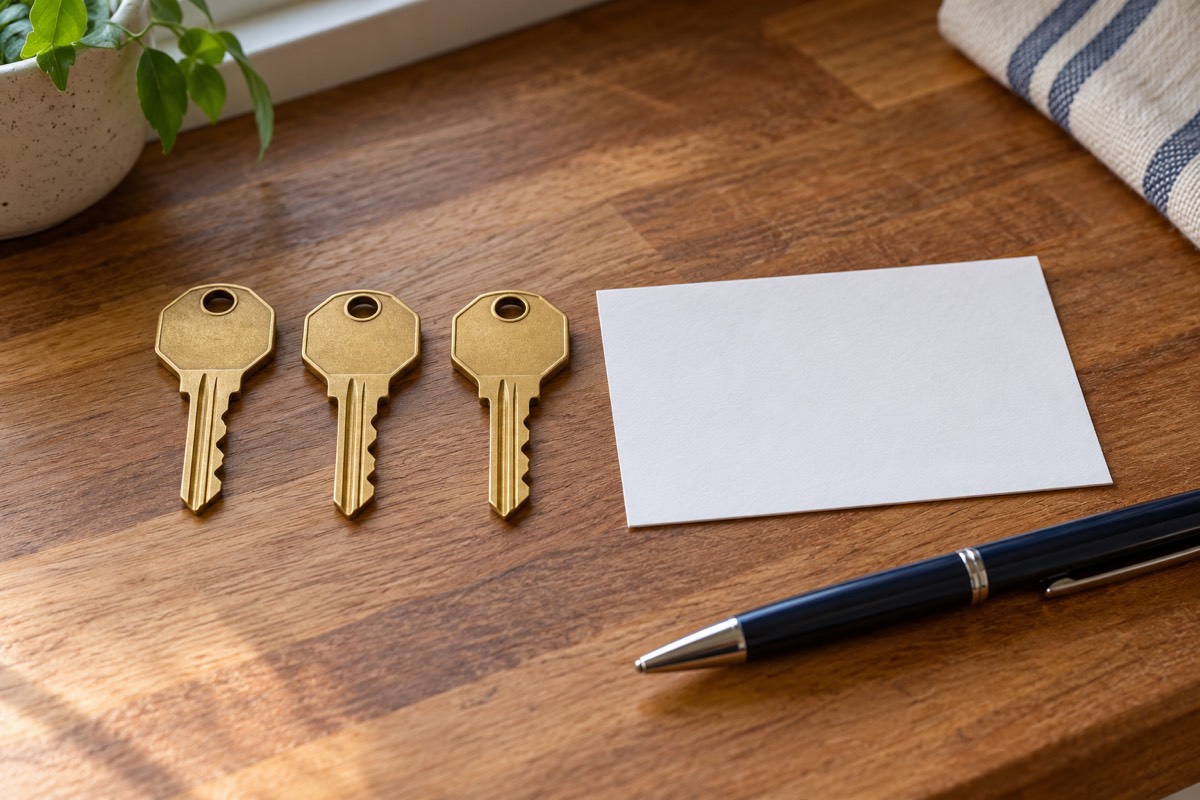
BHMA’s A156.30 key-control category names the attributes it looks at: key blank control, cylinder marking restrictions, and for electromechanical cylinders an audit trail and time zoning. Allegion, the maker behind Schlage, describes restricted keyways as ones where blanks are limited to authorized dealers and end users, with a letter of authorization needed to order restricted keys. Open keyways need no such authorization.
Medeco describes restricted, patent-protected keys that can only be duplicated or supplied through its authorized service centers. You can see its residential line on Medeco’s residential deadbolt page. Mul-T-Lock also publishes information on its patented cylinder platforms. Patent terms change, so check the current status with the maker rather than relying on a blog post.
Restricted keys do not replace good habits. If you have ever lost a key, hired contractors, or moved into a home with unknown copies, a rekey may do the job on its own. Our post on whether to rekey or replace your locks walks through that decision, and our rekeying service covers the work itself. For businesses managing many keys, the same logic scales up in master key systems.
Your door matters as much as the cylinder
The door, frame and strike plate set the real limit on how much force a lock can resist. A rated cylinder in a door with a short-screwed strike plate and a soft jamb will fail at the frame. Replacing short screws with long ones that reach the wall stud, using a heavy-duty strike plate and checking the bolt throw are low-cost upgrades with real effect.
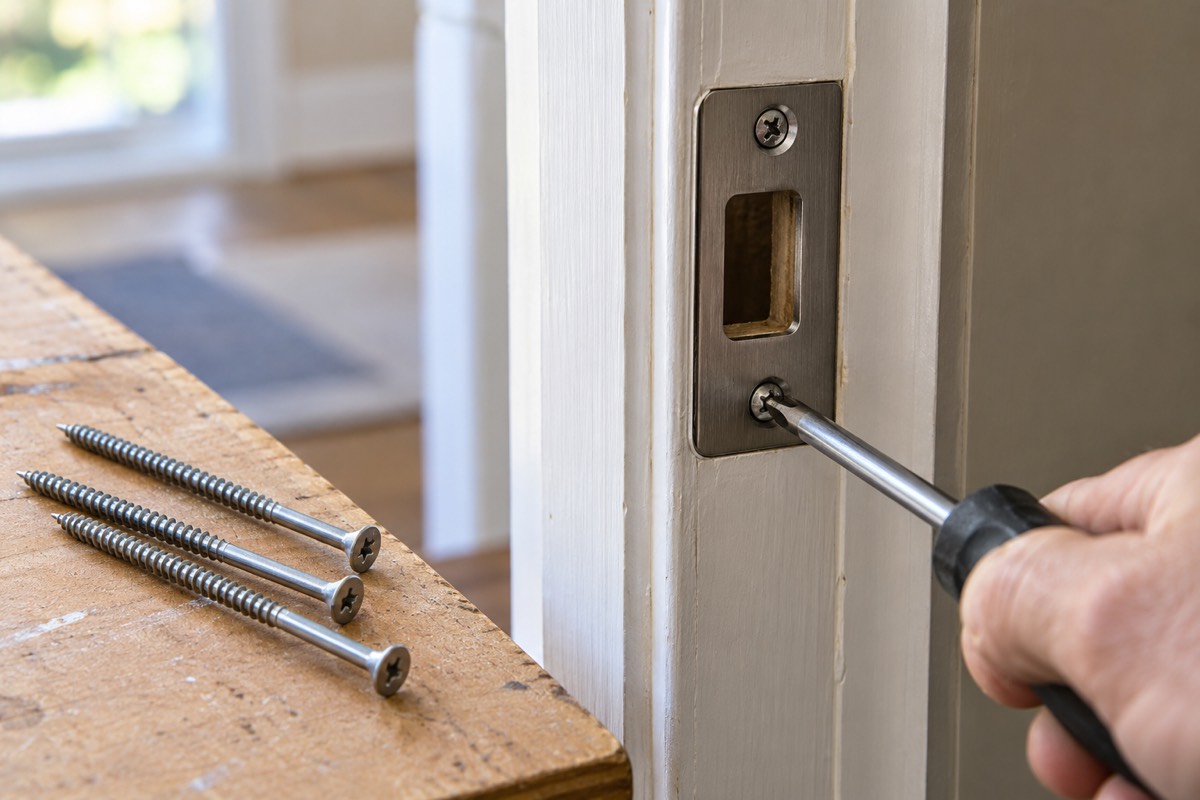
A Seattle Police Department crime prevention bulletin on door security says the most common way to force a door with a wooden jamb is to kick it open, and that the weakest point is almost always the strike plate. It notes that the average strike plate is secured only to the door frame molding. Its advice includes replacing short screws on strike and hinge plates with 3 to 4 inch wood screws that reach the wall stud, considering a four-screw heavy-duty strike, using at least one long screw in each hinge, and using a latch guard against pry-tool attacks. It also recommends a deadbolt throw of at least 1 inch and a deadbolt on every exterior door, including the one between the garage and the house. The full text is on the Seattle Police door security bulletin.
That is the reason a security-minded visit looks at more than the cylinder. If you want the strike, screws and throw checked while a new deadbolt goes in, our deadbolt installation service covers hardware and door prep together. If you also keep valuables at home, our notes on anchoring a gun safe to your floor cover the other half of home security.
Standard deadbolt, high-security cylinder or smart lock?
A standard deadbolt suits a sound door when your keys are well controlled. A high-security cylinder adds pick, drill and key-control resistance for people who want stronger protection or tighter control over key copies. A smart lock adds codes and app access but brings its own tradeoffs. The right pick depends on your door and how you use it.
| Standard deadbolt | High-security cylinder | Smart lock | |
|---|---|---|---|
| Typical rating to look for | ANSI/BHMA A156.40 for residential deadbolts | ANSI/BHMA A156.30 on the cylinder, UL 437 on some models | A mechanical grade on the lock itself, if the maker lists one |
| Key control | Usually an open keyway, so blanks are easy to buy | Restricted or patented keys on many models | Codes or app access, and often a backup key; varies by model |
| Pick and bump resistance | Conventional pin tumbler cylinders are broadly at risk of bumping if a blank fits | Sidebar and special keyway designs make bumping harder, not impossible | Depends on the key cylinder behind the keypad, if any |
| Door and strike matter? | Yes, always | Yes, always | Yes, always |
| Best fit | Sound door, keys under control | You want stricter control over who can copy keys | You want shared codes or remote access |
None of the three removes the need for a solid door. If smart locks are on your list, our smart lock installation cost guide for Austin covers pricing and what to expect, and our smart lock service page covers what we install. Here, treat the smart lock as one option in the comparison, not a replacement for the layers above.
Does your Austin home need one?
Many homes do fine with a sound, well-installed standard deadbolt on a reinforced door. A high-security cylinder makes the most sense when key copies are a real concern, when you have had a break-in or a lost key, or when you simply want stricter key control. Walk your own doors first with the checks below, then decide.
Five checks to run on your own front door
-
Step 1: Count your keys
List every person and company that holds a working copy. If you cannot, key control is your first problem.
-
Step 2: Look at the strike plate
Check the screw length. Short screws that only reach the jamb molding are the easiest weak point to fix.
-
Step 3: Check the deadbolt throw
A throw of at least 1 inch is the guidance in the Seattle bulletin. Fully extend the bolt and see.
-
Step 4: Inspect the door and frame
Look for splits, soft wood, loose hinges and a gap between door and frame that a pry tool could use.
-
Step 5: Name your lock
Find the brand and model on the lock body or box and look up its rating before paying for an upgrade.
Austin’s housing mix matters here. Historic homes in Hyde Park and Clarksville often have non-standard door preparations, and the original mortise pockets in 1920s bungalows need specific hardware, so you cannot simply drill new holes in a period door without affecting function and value. Modern tract homes in places like Mueller, Circle C and Pflugerville typically have standard preparations that accept any major brand, which makes the choice about security grade and features.
For context on why the door and key habits matter, the FBI’s 2019 Crime in the United States data reported that 55.7 percent of burglaries involved forcible entry, 37.8 percent involved unlawful entry with no force, and 6.5 percent were attempted forcible entry. Those are national 2019 figures and not an Austin statistic. They do show that locks and doors are only part of the picture: unlocked doors and unmanaged keys count too.
If you want a second set of eyes on all of this, our home security audit and lock change service are the places to start. Our post on the signs it is time to upgrade your home security covers the warning signs in more detail.
Texas renters: what the Property Code requires
Texas Property Code Chapter 92, Subchapter D, sets a baseline for rental dwellings: a keyed deadbolt or doorknob lock on each exterior door, a window latch on each exterior window, and related devices. Under Section 92.156, a landlord must rekey locks within seven days after each tenant turnover, at the landlord’s expense. That is a floor, not a high-security standard.
According to the text of Section 92.153 as published, a rental dwelling must have a doorknob lock or keyed dead bolt on each exterior door, a window latch on each exterior window, a sliding door pin lock plus handle latch or security bar, and a keyless bolting device and door viewer on each exterior door. Section 92.151 defines a keyed dead bolt as a lock that bolts into the doorjamb and is keyed outside, or a doorknob lock with a bolt of at least a one-inch throw.
Section 92.156 requires the landlord to rekey a security device not later than the seventh day after each tenant turnover date, at the landlord’s expense. Extra rekeys requested by the tenant are at the tenant’s expense. Statutes are amended, so read the current wording on the Texas Property Code Chapter 92 page and check your lease before acting.
How a high-security install works and what to ask first
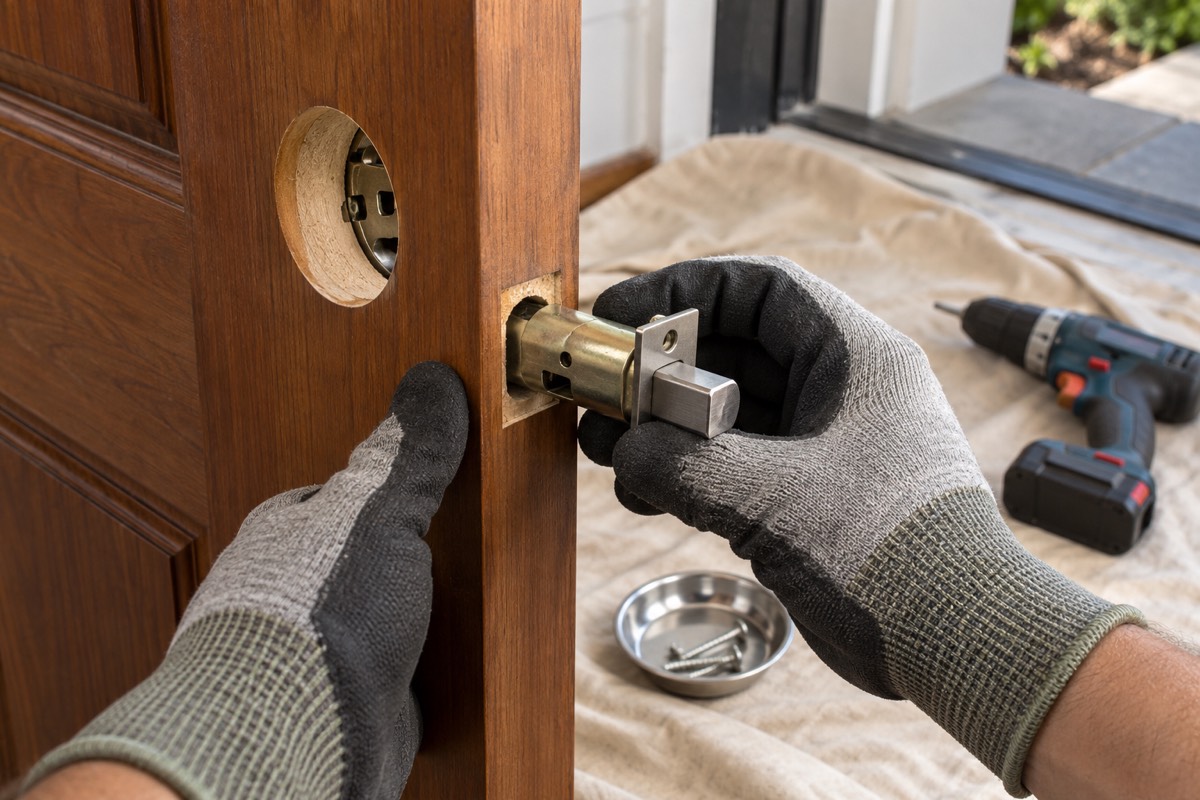
A good high-security install starts with the model and the standard, then covers the door. Ask which rating the cylinder carries, who supplies the keys, whether the keys are restricted, and what will be done to the strike plate and screws. Any licensed Texas locksmith can answer those questions plainly before work begins.
Austin Locksmiths operates under Texas DPS licence B30821501. Verify the licence of anyone you let near your locks, and be cautious about companies that do not name themselves clearly. Our guide to fake locksmith scams in Austin lists the warning signs to look for before you call.
On cost: the price of a high-security cylinder depends on the specific model, the number of keys and the condition of your door, so there is no single number to quote. Call us at (737) 222-7022 and describe your door. Published ranges on our pricing page are estimates, not a final quote, and the technician confirms the exact price on site before work begins.
Frequently asked questions
Is a high-security lock worth it for a house in Austin?
For many homes, a sound standard deadbolt on a reinforced door is a reasonable baseline. A high-security cylinder is worth considering if you want tighter key control, if keys have passed through many hands, or if you have had a break-in. The door and strike plate still have to be right.
Can a high-security lock be picked or bumped?
Yes, in principle. Resistant designs raise the time and skill needed. No lock is immune to picking, and bump-resistant is not bump-proof. Sidebar and restricted keyway designs make bumping harder, but researchers have shown that some high-security locks have been opened.
What does BHMA A156.30 actually certify?
It certifies a cylinder in three categories: key control, destructive attack and surreptitious attack. Each category gets a level of A, B or C, with C the highest. It covers the cylinder, not the door or the rest of the lock assembly.
What is the difference between UL 437 and BHMA ratings?
UL 437 is the UL standard for key locks, including door locks and locking cylinders. BHMA publishes the A156 family, including A156.40 for residential deadbolts and A156.30 for high-security cylinders. Both exist, and some models cite both. Always check the specific model.
Do restricted keys stop all copying?
No. Restricted keyways limit who can obtain blanks and authorize copies, which raises the bar considerably. They reduce casual copying, not determined attacks, and patents and dealer rules vary by maker, so check the current policy for your brand.
Does my landlord have to rekey the locks in Texas?
Texas Property Code Section 92.156 requires a landlord to rekey security devices not later than the seventh day after each tenant turnover date, at the landlord’s expense. Check the current statute and your lease, since the details can change.
Next step: check the door, then the lock
Start with the five checks above. Then decide whether a standard deadbolt, a high-security cylinder or a smart lock fits your door and your key situation. If you want help, call Austin Locksmiths at (737) 222-7022, or read about our high-security locks service first. We can talk through your door before anyone visits.
Prices shown are estimates
They give you a general idea of what the service costs, and are not a final quote. Your actual price depends on the lock, the vehicle or door, job complexity, and time of day. Your technician confirms the exact final price with you on site, before any work begins.